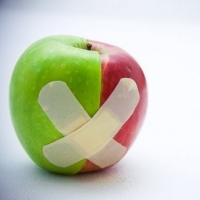
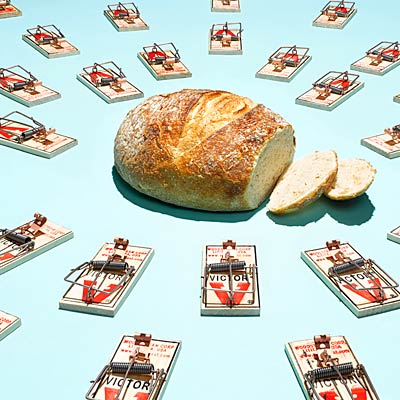
 Travis Rathbone Does a plate of pasta strike terror in your heart? A burger in a bun make you break out in a cold sweat? You're not alone. These days, we're skipping the bread basket in record numbers (the volume of bread, buns and rolls sold in U.S. stores fell by 9.1 percent between 2006 and 2011) and shunning starchy vegetables. It seems like a new low-carb eating plan bursts on the scene every few months. And nearly one in three adults report that they're cutting down on or completely avoiding gluten, according to market-research firm NPD Group. "Carb-phobia has really taken over people's minds," says Kim Larson, RDN, a spokesperson for the Academy of Nutrition and Dietetics.
While many of us think of carbs as bread and pasta, they're in any food that comes from a plant, including fruits, vegetables, nuts, grains, seeds and legumes. "It's a huge, diverse class of foods," Dr. Katz explains.
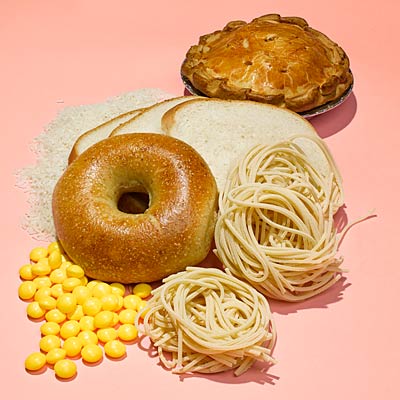 Travis Rathbone Far from being poison, then, glucose sparks life. "If you're in a hospital and they need to get some energy into you, they'll use a glucose drip," says Joanne Slavin, PhD, professor of food science and nutrition at the University of Minnesota and chair of the 2010 Dietary Guidelines Advisory Committee on Carbohydrates. Dr. Katz adds, "If you don't have enough glucose in your blood, you're dead. It's that simple."
Next Page: The surprising danger of low-carb diets
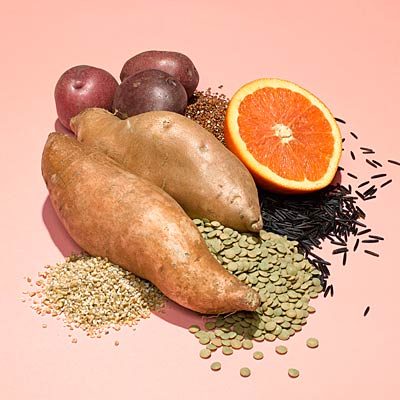 Travis Rathbone The surprising danger of low-carb diets
 Going low-carb is far from a new concept. As far back as 1863, Englishman William Banting wrote a popular pamphlet describing how he lost 35 pounds on a meat-heavy, carb-light regimen. In the early 1970s, Dr. Atkins made a splash sharing a similar philosophy. But in the early 1980s, the U.S. Department of Agriculture told Americans that they should eat less fat for better heart health. Low-fat, high-carb products popped up everywhere, and we embraced our pasta bowls.
"We know what a healthy diet is," Dr. Katz says. "All the studies that show better health outcomes over the long term are rich in plant foods—real plant foods, not highly processed, sugar-added, glow-in-the-dark crap." Think of Mediterranean, DASH and other ways of eating that have been linked to better health, adds Robert H. Eckel, MD, professor of medicine at the University of Colorado Anschutz Medical Campus and former president of the American Heart Association: "Those are not low-carb diets."
Glycemic index, or GI, refers to how carbohydrates affect blood glucose levels: Low-GI foods tend to raise blood sugar more slowly than high-GI foods. But the measurement doesn't take into account how much of the food is eaten in a typical serving, which can skew results, Slavin explains. Watermelon has a high glycemic index, for example, but since it's mostly water, you don't eat that many carbohydrates in one serving, so it doesn't actually raise blood sugar significantly.
Next Page: 4 low-carb diets, compared
Travis Rathbone Low-Carb Diet SmackdownSouth Beach, Dukan, Paleo—what the wheat?! We got the health scoop on some of the most popular protein-rich plans from Nanette Steinle, MD, assistant professor of medicine at the University of Maryland School of Medicine, and Walter Willett, MD, chair of the department of nutrition at the Harvard School of Public Health.
About 35 to 45 percent of calories from carbs
10 to 25 percent of calories from carbs in the initial phase
About 30 percent of calories from "good" carbs in the initial phase
An estimated 27 percent of calories from carbs in the first phase